Safe Space Mapping: Build Your Plan for Support & Boundaries
Introduction
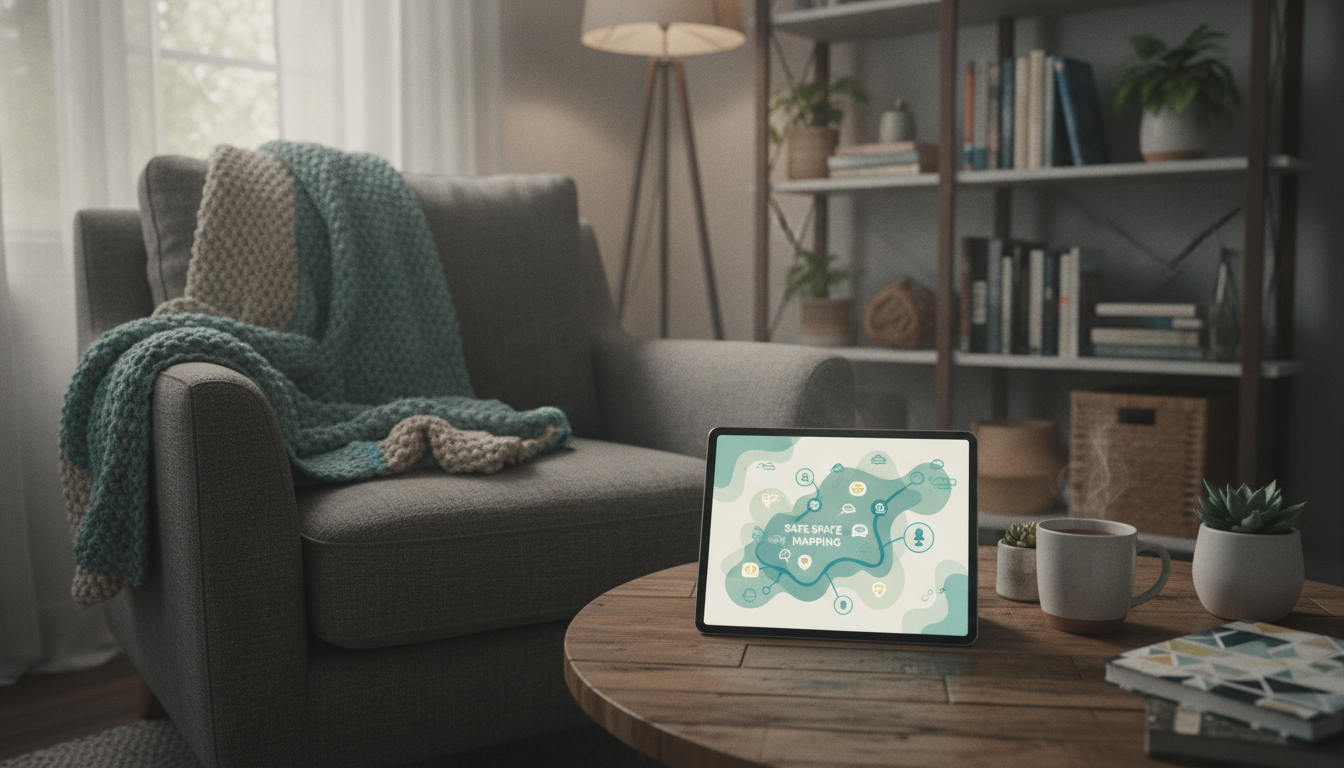
Safe space mapping is a practical way to identify where support exists, where risks show up, and what boundaries and resources make daily life feel more stable. It’s less about finding a “perfect” environment and more about creating a clear, usable picture of what helps you stay regulated, connected, and able to make choices—even when stress is high. This guide explains what safe spaces are in real life, how to map them across home, work, school, and online settings, and how to turn the map into a plan you can use in everyday moments.
What “safe space” means in practice
A safe space is a mix of physical, emotional, and social conditions that reduce harm and increase a sense of control. That might mean privacy and a clear exit, or it might mean being around people who respect boundaries and communicate without escalation.
Comfort and safety are related, but not identical. A place can feel familiar yet still be unsafe (for example, a familiar group chat where dismissive comments are common). The reverse can also be true: a space can feel challenging—like a new classroom or therapy setting—while still being genuinely safe because expectations are clear and support is reliable.
Safety is contextual. Needs can change depending on time of day, who is present, what topics are being discussed, and your current stress level. A safe space map works best when it tracks three layers at once: places (where), people (who), and practices (how you stay steady).
The core elements of safe space mapping
Most maps include five essentials:
- Locations: rooms, buildings, neighborhoods, transit routes, and virtual platforms.
- People: supportive contacts, neutral contacts, and high-risk contacts—plus role and reliability.
- Signals: early warning signs that safety is decreasing (tone shifts, crowding, dismissiveness, escalating conflict).
- Supports: grounding tools, communication scripts, accessibility aids, and exit strategies.
- Boundaries: what’s okay, what’s not, and what triggers a pause or exit.
Safe Space Map Components
| Component | What to capture | Simple rating idea |
|---|---|---|
| Place | Where it is, when it’s accessible, privacy level, exits | 1–5 safety score by situation |
| People | Who helps, who harms, who is unpredictable | Green/Yellow/Red |
| Activities | What feels stabilizing (walks, music, journaling) | Low/Medium/High impact |
| Boundaries | Non-negotiables and flexible limits | Clear / Needs work |
| Plans | How to leave, who to contact, what to do next | Ready / Draft / Missing |
How to build a safe space map step by step
- Start with one setting (home, school, work, community, or online) to avoid overwhelm. The goal is a usable “first draft,” not a complete life inventory.
- List 3–10 anchor points: places or routines that already feel steady (a morning walk, a specific seat in the library, a quiet room, a supportive channel).
- Add risk zones: locations, times, or interactions that commonly elevate stress or conflict (certain meetings, crowded transit, late-night scrolling, specific family gatherings).
- Assign a quick rating (Green/Yellow/Red or 1–5) based on predictability, respect, privacy, and how easy it is to exit.
- Write one boundary statement per risk zone. Example: “If voices rise, I step away for 10 minutes.” Keep it brief and action-based.
- Connect each Yellow/Red area to at least one support: a person to text, a script to repeat, a grounding tool, or an alternate route.
- Review weekly for small updates rather than waiting for a crisis. Small edits build a map you actually trust.
Using the map in everyday moments
A map becomes useful when it guides decisions in real time—especially during transitions, when stress often spikes.
Mapping safe spaces online and in group settings
Getting the most from supportive resources
If you want a structured format you can fill in and revisit, consider A Guide to Safe Space Mapping | Digital Ebook on Understanding, Creating & Using Safe Spaces. For calming practices that fit into your “supports” section, Calm Your Mind: Guided Meditation Series | Audio Course | Anxiety Relief Meditation can be used as a ready-made grounding option. If school routines are a major setting on your map, Study Skills Mastery Guide | Digital Study Guide, Learning Strategies eBook, Focus Tips, Study Methods, Memory Techniques, Study Checklist PDF can help stabilize schedules and reduce academic pressure points.
For additional guidance on coping and support pathways, reputable references include the National Institute of Mental Health (NIMH) overview on coping with traumatic events and the American Psychological Association (APA) guide to psychotherapy.
When additional help is needed
If there is immediate danger, contact local emergency services. In the U.S., the SAMHSA National Helpline is a starting point for treatment and support referrals.
FAQ
What is safe space mapping used for?
Safe space mapping helps you identify supportive places, people, and practices, recognize risk zones early, and create a practical plan for boundaries and exits. It turns vague feelings of “this is hard” into clear steps you can use.
Can a safe space map include online spaces and social media?
Yes. Online mapping can include platform controls (mute/block), privacy settings, trusted moderators or contacts, and exposure limits that reduce conflict and overwhelm.
How often should a safe space map be updated?
Small weekly or biweekly check-ins keep the map realistic and usable. Update it after major life changes or after any difficult situation that teaches you what did or didn’t work.















Leave a comment