BJD vs MJD Dolls: Key Differences in Joints & Care
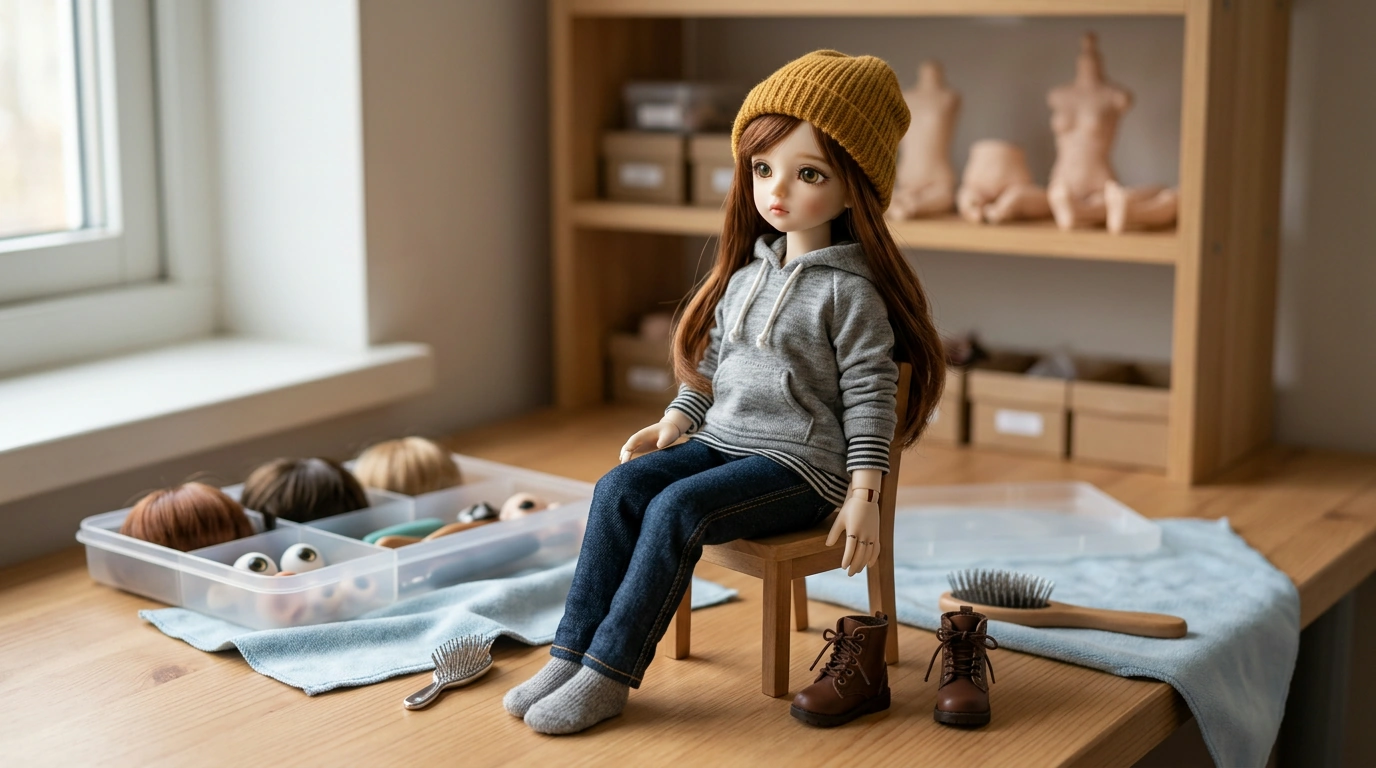
What is the difference between BJD and MJD dolls?
BJD stands for “ball-jointed doll,” a broad category of dolls built with multiple jointed parts connected by elastic or mechanical systems, designed for posing and customization. MJD most commonly refers to “mechanical jointed doll,” a subset (or style) of jointed dolls that uses internal engineering—often peg, hinge, or frame-like mechanisms—rather than (or in addition to) traditional elastic stringing.
BJD: a category defined by structure and customization
Most collectors use “BJD” as an umbrella term for highly poseable dolls made from materials like resin or vinyl, with joints at key points (neck, shoulders, elbows, wrists, torso, hips, knees, ankles). BJDs are widely known for interchangeable parts (heads, hands, eyes), extensive styling options (wigs, outfits, faceups), and a “doll hobby” ecosystem that supports repairs and upgrades. Many BJDs are traditionally strung with elastic, which allows tension adjustments and smooth posing when properly maintained.
MJD: a focus on mechanical joint design
“MJD” is used less consistently, but it generally points to dolls where the jointing relies on mechanical components (internal frames, click joints, hinges, or engineered skeletons). This can affect how the doll holds a pose, how it feels when you move it, and how maintenance works. Mechanical joints may offer stable standing or crisp articulation, while also introducing different wear points (plastic hinges, screws, or internal frames) compared with elastic tension and sueding in many BJDs.
Which one should you choose?
If the goal is deep customization—faceups, styling, part swaps, and hobby-friendly repair—BJD is typically the term (and community) to start with. If strong, “action-figure-like” stability or a particular internal engineering style matters most, an MJD-style build may appeal. For practical tips on styling, posing, and care for a 1/4 BJD, visit this BJD doll styling, posing, and care guide.
FAQ
How do you maintain a BJD’s posing and joint tension over time?
Check joint looseness periodically, keep the doll clean and dust-free, and re-string or adjust tension when poses start slipping. Protective measures like sueding or joint padding can also improve grip and stability.













Leave a comment