Creative Hobby Date Ideas to Feel Closer (Home + Outdoor)
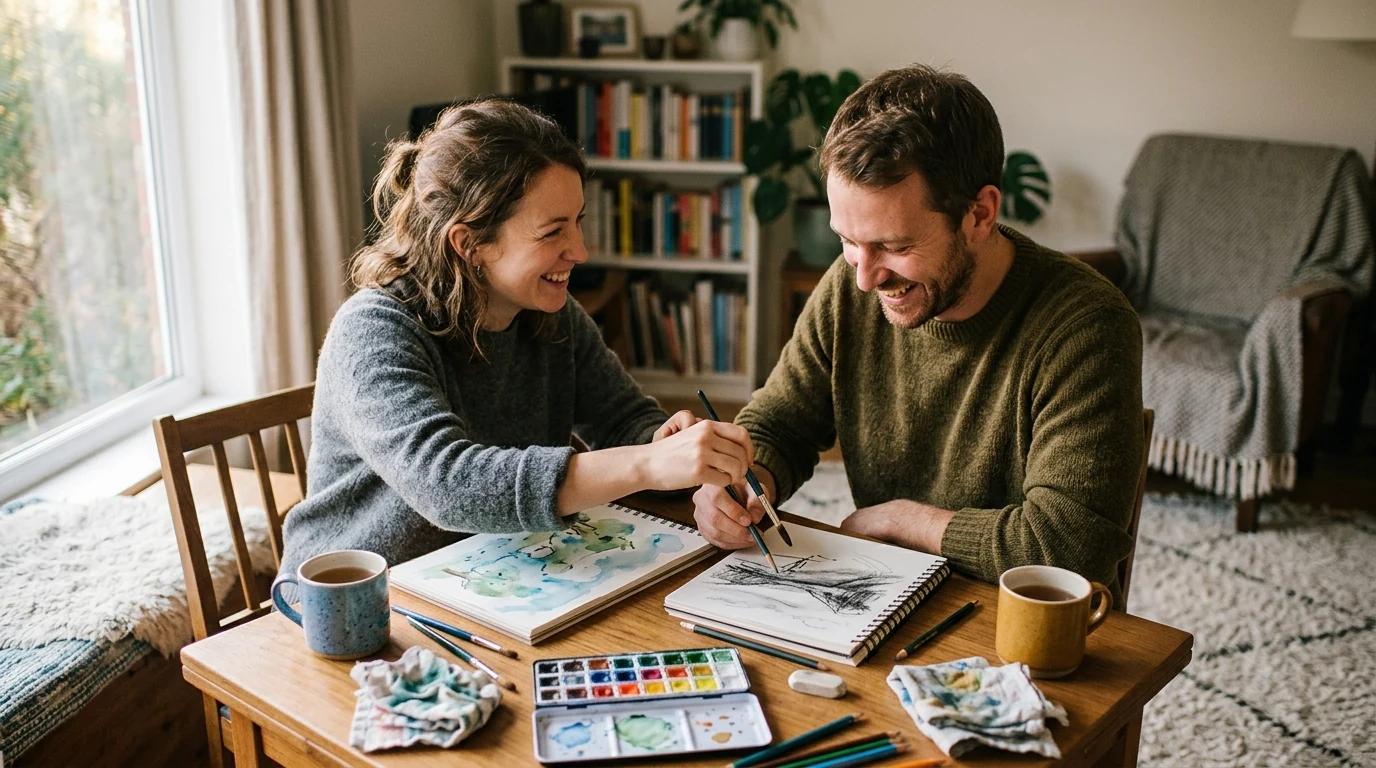
Creative Hobby Date Ideas That Bring You Closer: a simple way to turn time together into real connection
Date nights don’t have to be loud, expensive, or perfectly planned to feel meaningful. One of the fastest ways to feel closer is sharing a small project, learning something side-by-side, or trying a playful challenge that creates natural conversation. Our team pulled together easy hobby-style dates—at home and outdoors—so planning feels effortless and your time together feels personal.
Why hobby dates work when dinner-and-a-movie feels flat
Classic date defaults can be nice, but they often leave you staring at each other wondering what to say—or staring at a screen instead. Hobby dates shift the focus to doing something together, which tends to make connection feel easier.
- They replace “What should we talk about?” with a shared task that sparks conversation naturally.
- They add novelty without needing a big budget—newness is often what makes a night feel memorable.
- They create small wins (a finished sketch, a new recipe, a better photo), which builds a sense of “team.”
- They reduce phone-scrolling by giving hands and attention something to do.
- They scale to any energy level: calm, cozy, adventurous, or competitive.
If you want a research-backed perspective on what strengthens relationships over time, the Gottman Institute and the American Psychological Association both emphasize everyday habits—communication, shared meaning, and turning toward each other—more than grand gestures.
The hobby-date framework: pick a vibe, set a timer, keep it light
When date night feels like “another thing to plan,” structure is your friend. This simple framework keeps it fun and prevents the night from turning into a long, vague hangout.
- Pick one vibe together: cozy, curious, playful, adventurous, or sentimental.
- Set a timer: 30–90 minutes so the plan has a clear start and finish.
- Agree on one rule: no perfection—this is about connection, not performance.
- Close with a 5-minute highlight recap: each person shares one favorite moment and one thing they learned about the other.
At-home hobby date ideas that feel surprisingly meaningful
At-home dates shine when you want comfort, consistency, and fewer variables. These are designed to be easy to start, with just enough structure to keep the momentum going.
Cookbook roulette (with a twist)
Each person chooses one ingredient. Your job is to build a meal around both and plate it like a restaurant. Bonus: name the dish like you’re on a cooking show.
Two-person art swap
Start a sketch/paint/doodle for 10 minutes, then swap and finish the other person’s piece. Keep it playful: add one “unexpected” element (a tiny star, a silly hat, a hidden heart).
DIY tasting night
Pick three versions of the same thing (chocolate, tea, hot sauce) and invent a shared rating scale (comfort, surprise, “would buy again”). You’ll be shocked how quickly this turns into real conversation.
Puzzle-with-a-story
Build a puzzle and narrate a ridiculous plot twist every time you complete a corner or a color section. The point isn’t the puzzle—it’s the shared narrative.
Music timeline
Take turns playing one song from each life era (childhood, teen years, early adult, now). Share the memory it brings up, even if it’s small and ordinary.
Home “photo studio”
Pick one theme (shadows, hands, reflections) and take turns directing a 10-shot mini shoot. The director chooses pose, angle, and mood; the model can add one “creative rebellion.”
Partner-led micro class
One person teaches a mini skill in 20 minutes (origami, basic guitar chords, three yoga poses). Switch roles. It’s intimate in a low-pressure way because you’re learning each other, not just the skill.
Outdoor hobby date ideas that break routine without a big plan
Quick “choose your night” guide
| Your situation tonight | Best hobby-date style | Simple starter idea | Time needed |
|---|---|---|---|
| Both tired, still want closeness | Cozy + low-effort | DIY tasting (tea/chocolate) + 3 questions | 30–45 min |
| Conversation feels stuck | Hands-busy, talk-optional | Art swap or puzzle-with-a-story | 45–90 min |
| Need a reset from screens | Outdoor + playful | Scavenger walk with photo list | 45–75 min |
| Want something memorable | Curious + creative | Farmers’ market picnic challenge | 60–120 min |
| Short window before bed | Micro-date | Partner-led mini class (20 minutes each) | 30–50 min |
Make it feel romantic (without forcing it)
For more on how small, repeatable habits support well-being and connection, Greater Good Magazine (UC Berkeley) is a helpful resource.
Our picks to make hobby dates easier (and easier to repeat)
- Creative Hobby Date Ideas That Bring You Closer (ebook) — a ready-to-use list for at-home and outdoor hobby dates when you want to pick fast and actually start.
- Calm Your Mind: Guided Meditation Series (audio course) — a calm reset for stressful weeks, so you show up to date night less rushed and more present.
Pair it with a calmer headspace on stressful weeks
FAQ
What if one partner says they’re “not creative”?
Choose low-pressure options like a tasting night, scavenger walk, or a simple photo theme, and frame the whole thing as play—not talent. A timer plus a clear “no perfection” rule keeps it safe and surprisingly fun.
How long should a hobby date be to actually feel connecting?
For most couples, 45–90 minutes is long enough to settle in and feel close without dragging. If you’re busy, a 30-minute micro date still works best when you set a clear start/end and do a quick recap.
Are these date ideas better at home or outdoors?
Both work: at-home dates are consistent and cozy, while outdoor dates add novelty and a mood reset. Alternating based on energy, weather, and schedule keeps things fresh without overplanning.













Leave a comment