Baby Allergy Signs: When to Get Help and What to Track
Baby Allergy Signs: When to Get Help and What to Track

Start with the signs that need immediate help
Call emergency services immediately if your baby has trouble breathing, persistent coughing or wheezing, swelling of the tongue or throat, or becomes unusually limp or unresponsive. Also seek emergency help if symptoms affect more than one body system after a possible allergen exposure—for example, hives together with vomiting. A severe allergic reaction can worsen quickly. Do not wait to complete a checklist, and do not offer the suspected food again to see what happens.
If there are no emergency signs, contact your baby’s clinician for guidance, particularly when symptoms recur or seem to follow a specific food. The NHS guidance on anaphylaxis describes serious symptoms and why prompt treatment matters.
What you notice and what to do
| What you notice | Next step |
|---|---|
| Emergency: breathing difficulty, throat or tongue swelling, or unusual limpness | Call emergency services immediately. |
| Emergency: hives plus vomiting or another symptom affecting a different body system after a possible exposure | Seek emergency medical help immediately. |
| A mild, isolated rash or digestive change without emergency signs | Record the details and ask your baby’s clinician what to do next. |
Describe the signs without diagnosing them
Possible allergy symptoms can involve the skin, stomach, or breathing. You might notice hives, swelling, vomiting, diarrhea, coughing, or wheezing. A rash or digestive change can also have another cause; appearance alone cannot establish an allergy.
For symptoms that do not require emergency care, note when they began, how long they lasted, and whether your baby was otherwise acting as usual. These details can help a clinician assess what happened, but your notes cannot confirm the cause on their own.
Check the product’s listed specifications when evaluating describe the signs without diagnosing them.
Featured in this guide
Spotting Baby’s Allergy Reactions | Printable Checklist for New Parents | Signs of Baby Allergy Reactions Tracker & Early Warning Guide
Build a record you can use at an appointment
When you introduce a food, write down its ingredients, the amount your baby ate, and the time. If symptoms appear, record what you noticed and when. Include other possible exposures and any advice you received from a healthcare professional. Specific observations are more useful than a guess about the cause.
Common food allergens include egg, milk, peanut, tree nuts, wheat, soy, fish, and shellfish. This list does not predict whether your baby will react. Ask your clinician for individualized guidance about introducing allergens if your baby has severe eczema or an existing food allergy. If a food seems connected to symptoms, seek clinical advice before offering it again.
Make the checklist part of a simple routine
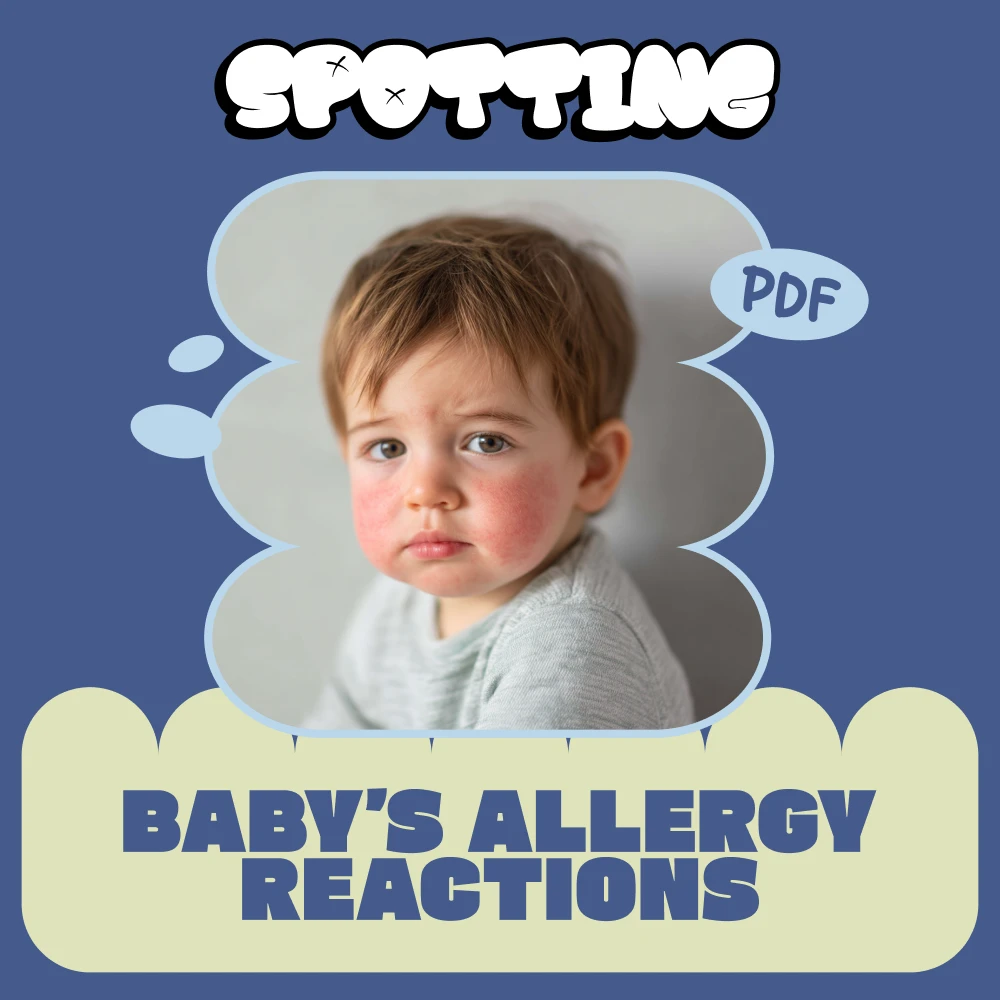
Keep notes wherever feeding details are easiest for you to capture. Our Spotting Baby’s Allergy Reactions printable checklist can stay close at hand as a place to organize signs, timing, and questions for your baby’s clinician. Bring completed notes to an appointment, along with any instructions you were given by phone.
A printable is a record-keeping aid, not a diagnostic tool or a substitute for urgent care. If you also want a separate moment to unwind after a demanding day, our Calm Your Mind guided meditation series is an optional resource for you—not a response to your baby’s symptoms. The practical order stays the same: respond to serious symptoms first; for everything else, clear notes can make the next conversation easier.
FAQ
What are the symptoms of an allergic reaction in babies?
Possible symptoms include hives or swelling, vomiting or diarrhea, and coughing or wheezing. Call emergency services for breathing trouble, tongue or throat swelling, unusual limpness, or symptoms affecting more than one body system after a possible exposure; have a clinician assess suspected allergies.
Can you show me pictures of a baby’s allergic reaction rash?
Rashes vary, and pictures cannot reliably tell you whether a rash is allergic. If it is safe to do so, you can photograph the rash to show your baby’s clinician, but never delay emergency care to take a picture.
What are the symptoms of a baby’s weaning allergy?
Hives, swelling, vomiting, diarrhea, coughing, or wheezing may appear after a newly introduced food, but timing and appearance alone cannot establish the cause. Record the food, timing, and symptoms, and seek clinical advice.
What are the main allergens that babies are most likely to be allergic to?
Common food allergens include egg, milk, peanut, tree nuts, wheat, soy, fish, and shellfish. This list cannot predict whether your baby will react to any of them; ask your clinician for individualized guidance when needed.
See if Spotting Baby’s Allergy Reactions | Printable Checklist for New Parents | Signs of Baby Allergy Reactions Tracker & Early Warning Guide fits your setup













Leave a comment