Hybrid IEMs Explained: Drivers, Tuning, and Sound
What is hybrid IEMs?
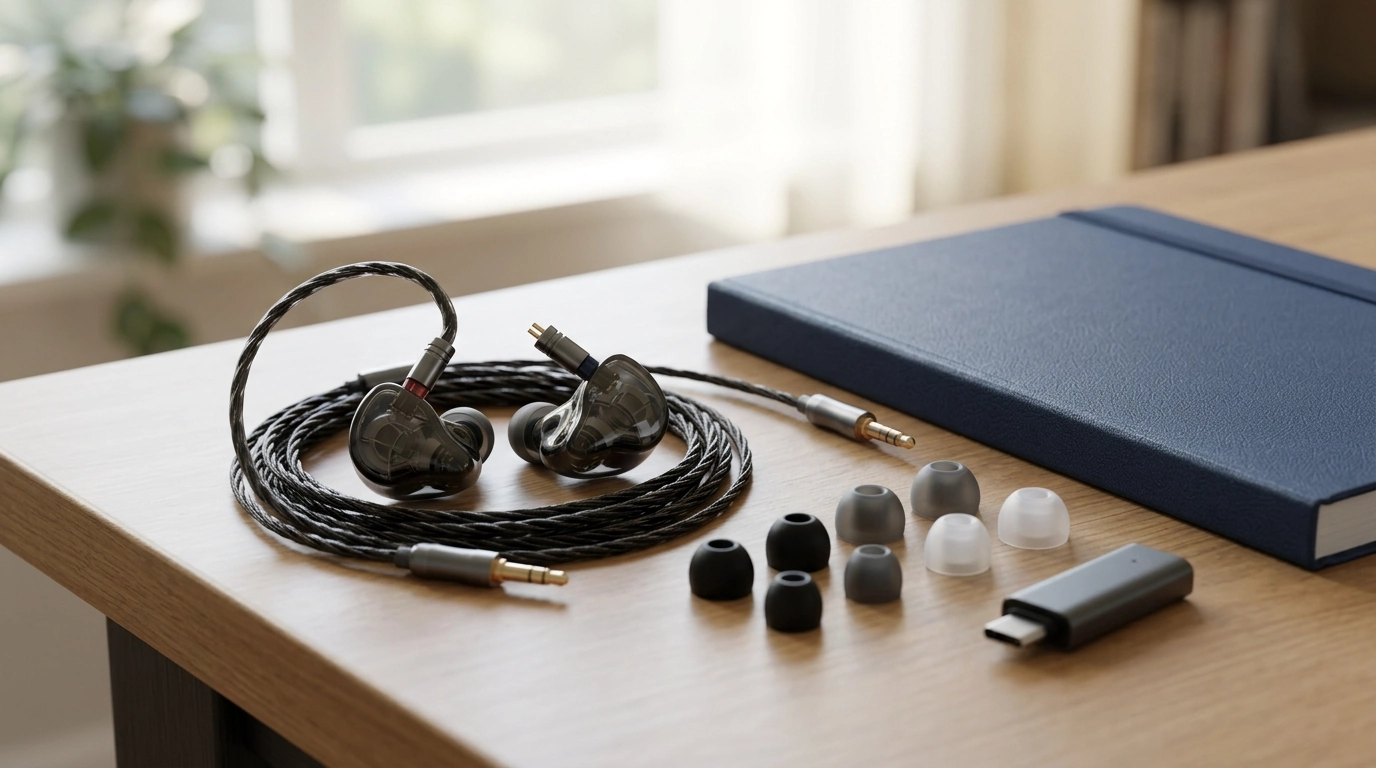
Hybrid IEMs (hybrid in-ear monitors) are earphones that use more than one type of driver technology in the same earpiece to reproduce sound. The most common setup combines a dynamic driver (often used for bass) with one or more balanced armature drivers (often used for mids and treble). Some hybrids add electrostatic (EST) or planar drivers for extra high-frequency detail or speed.
The point of a hybrid design is to let each driver type handle the range it’s best at. A dynamic driver can deliver physical, natural low-end impact, while balanced armatures can provide crisp articulation and separation for vocals and instruments. A crossover network—electrical, acoustic, or both—splits the signal so each driver plays its assigned frequencies.
Because multiple drivers are working together, tuning matters as much as the driver count. A well-tuned hybrid can sound cohesive and spacious, while a poorly matched hybrid may have a “disconnected” feel between bass and mids or a sharp treble peak. Fit and ear tips also play a big role: a weak seal can drain bass and throw off the intended balance.
For a deeper look at how hybrid audiophile IEMs are tuned, how to get the right fit, and how sources can change what you hear, visit this guide to hybrid audiophile IEMs.
For Hybrid IEMs Explained: Drivers, Tuning, and Sound, the best answer depends on fit, material, care instructions, and how the product will be used day to day.
Checking those details first helps avoid a poor match and keeps the choice practical after delivery.
For Hybrid IEMs Explained: Drivers, Tuning, and Sound, the best answer depends on fit, material, care instructions, and how the product will be used day to day.
Checking those details first helps avoid a poor match and keeps the choice practical after delivery.
FAQ
Are hybrid IEMs better than single-driver IEMs?
Not automatically. Hybrids can offer stronger bass plus cleaner detail, but a great single dynamic or single balanced armature IEM can sound more coherent if the hybrid tuning and crossover aren’t done well.














Leave a comment