Hybrid Audiophile IEMs: Tuning, Fit, and Source Tips
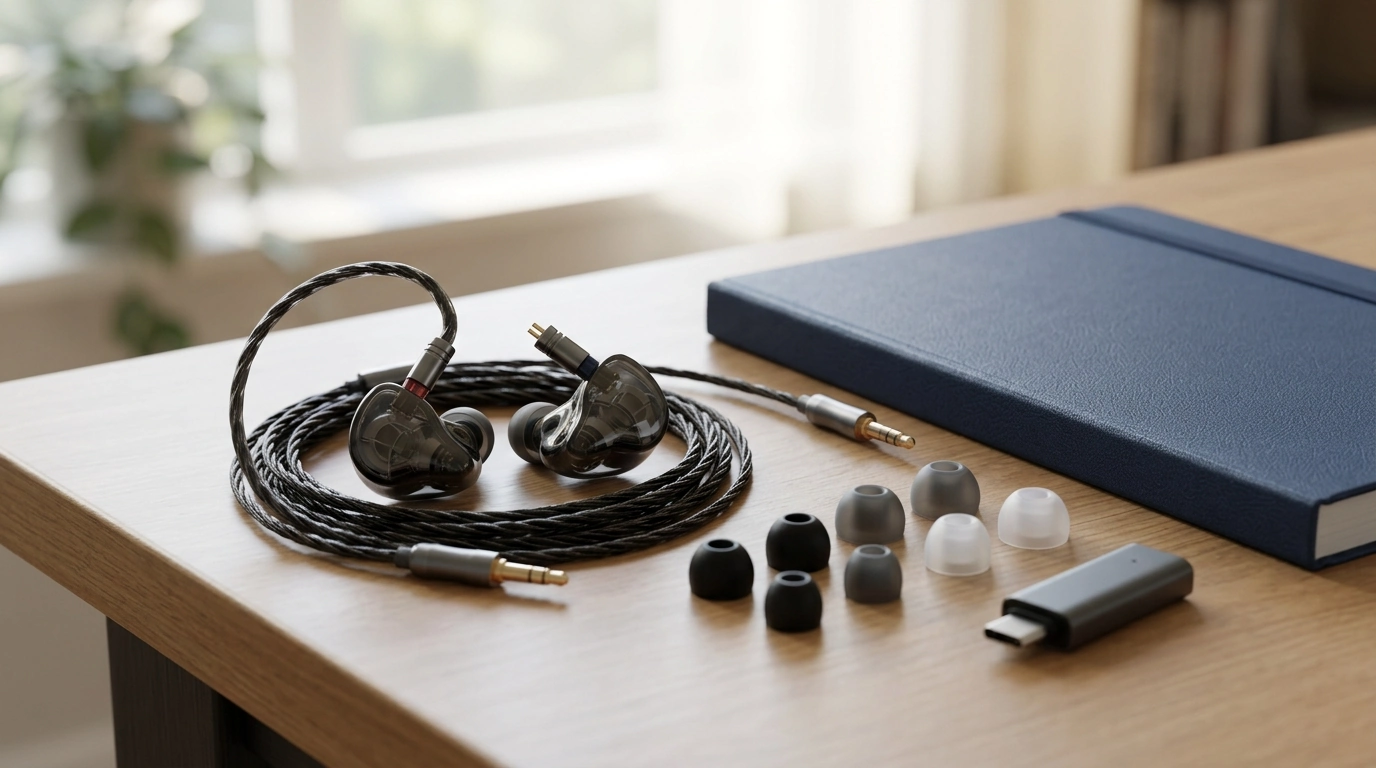
Hybrid Audiophile IEMs: A Clear Guide to Sound, Fit, and Daily Use
Hybrid in-ear monitors combine different driver types to balance bass impact, midrange clarity, and treble detail in a compact design. The result can feel both physical and precise—rumbling sub-bass with crisp edges on vocals, strings, and cymbals. This guide explains what makes hybrid IEMs distinct, how to choose a sound signature that fits your library, and how to get consistent performance from fit, sources, tips, and care.
What “Hybrid” Means in an IEM
Most hybrid layouts pair a dynamic driver (often dedicated to bass) with balanced armature drivers (commonly used for mids and treble). Some designs add an electrostatic/EST tweeter for ultra-high frequencies, aiming for extra “air” and spaciousness without losing low-end weight.
Dynamic drivers tend to deliver natural sub-bass extension and a tactile slam that feels effortless on kick drums and synth drops. Balanced armatures can improve perceived speed, separation, and presence in vocals and guitars, helping complex mixes sound cleaner at the same listening volume.
Driver count alone doesn’t guarantee quality. Crossovers and acoustic chambers matter as much as the parts themselves; a well-integrated 2–3 driver hybrid can outperform a poorly tuned multi-driver model. When integration is done right, hybrids often deliver a “best of both worlds” presentation: satisfying low-end punch with crisp definition and detail up top.
Common Driver Types in IEMs and How They Tend to Sound
| Driver type | Typical strengths | Typical trade-offs | Best for |
|---|---|---|---|
| Dynamic (DD) | Deep bass extension, natural timbre, cohesive tone | Can sound slower or less separated if poorly tuned | Electronic, hip-hop, rock, full-bodied listening |
| Balanced armature (BA) | Clarity, detail, fast transients, good imaging | Can sound dry/metallic if tuned aggressively; bass may feel less physical | Vocals, acoustic, detail-focused listening |
| EST / electrostatic tweeter | Air, sparkle, extension above the upper treble | Needs careful integration; can add brightness if overdone | Cymbals, ambience, spaciousness |
Sound Signature Choices: Finding the Right Tuning
Hybrids come in a wide range of tunings, and choosing the right one is often more important than chasing specs. If possible, use familiar tracks that reveal bass control, vocal tone, and treble smoothness.
- Bass-boosted tunings: Emphasize sub-bass rumble and punch. Look for clean mid-bass control—too much warmth in the mid-bass can mask vocals and blur kick-drum texture.
- Neutral-with-bass lift: A studio-leaning midrange with a tasteful low-end foundation. This is frequently the safest all-round profile for mixed libraries.
- Bright/analytical tunings: Highlight micro-detail and upper harmonics. Prioritize smooth upper mids to reduce “shout” on vocals or glare on guitars.
- Warm tunings: Relax the treble and push body in the lower mids. Great for long sessions, though some listeners will miss the last bit of perceived air and sparkle.
Try to separate tuning from technical performance. Two IEMs can have similar bass levels but differ dramatically in stage width/depth, imaging stability, layering, and note weight. Those technical traits often determine whether a hybrid sounds “hi-fi” at everyday volumes.
Fit, Comfort, and Isolation: The Real Performance Multiplier
A hybrid IEM can only deliver its intended bass and treble balance with a proper seal. Even a small leak can remove sub-bass and make the entire signature feel thin, sharper, or oddly distant.
Cables, Connectors, and Build Details That Matter
Source Pairing: Phone, Dongle DAC, DAP, and Desktop
EQ is a practical tool for the last 10–20%: trimming mid-bass bloom, smoothing a sharp treble peak, or adding a gentle sub-bass shelf without pushing the drivers into distortion. For tuning references and research on preferred response curves, see Harman’s headphone and in-ear research. For safer habits, the WHO Make Listening Safe guidance is a solid baseline—especially because a better seal can help you listen comfortably at lower volumes.
Daily Care and Longevity
Hybrid Audiophile IEMs at a Glance
Quick Checklist Before Buying
| Priority | What to confirm | Why it matters |
|---|---|---|
| Comfort | Shell size, nozzle angle, weight | Determines whether the IEM can be worn for hours |
| Seal | Tip size/material, insertion depth | Controls bass response and isolation |
| Tuning | Bass level, vocal presence, treble smoothness | Sets enjoyment across genres and long sessions |
| Compatibility | Connector type, source noise/power | Avoids hiss, ensures stable fit and replaceable cables |
| Durability | Nozzle mesh, strain relief, case | Improves long-term reliability |
Recommended Picks (In Stock)
- Hybrid Audiophile IEMs — a straightforward starting point for listeners who want hybrid weight in the lows with crisp detail for everyday use.
- Study Skills Mastery Guide | Digital Study Guide, Learning Strategies eBook, Focus Tips, Study Methods, Memory Techniques, Study Checklist PDF — useful for building a distraction-free routine for long listening sessions, practice, or focused work.
- Calm Your Mind: Guided Meditation Series | Audio Course | Anxiety Relief Meditation — a simple way to add quiet breaks between sessions and reduce fatigue when using isolating earphones daily.
FAQ
Do hybrid IEMs always sound better than single-driver IEMs?
No—sound quality depends on tuning and how well the crossover and acoustics integrate the drivers. A well-tuned single dynamic driver can sound more cohesive than a hybrid with poor phase alignment or uneven treble.
Why did the bass disappear after changing ear tips?
The seal likely changed. Try a larger size, experiment with foam for a tighter seal, and confirm insertion depth; also make sure vents aren’t being blocked by the tip stem or your ear.
Is a dongle DAC worth it for hybrid IEMs?
Often, yes: a good dongle can lower noise, improve channel balance at low volume, and add headroom for dynamic peaks. It won’t change the core tuning, but it can reduce hiss and improve control depending on how sensitive the IEMs are.














Leave a comment