Practice Anywhere: Golf Hitting Mat With Tees Guide
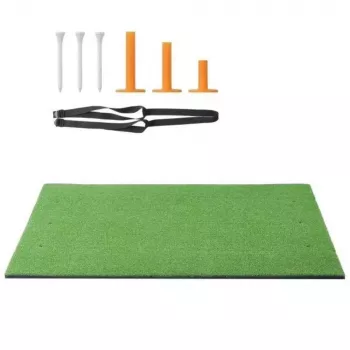
Golf Hitting Mat with Tees: A Simple Way to Practice at Home
A good hitting mat makes it easier to practice full swings, chips, and tee shots without tearing up the lawn or relying on a range. The right turf feel, stable base, and tee compatibility help build consistent contact while keeping practice setup quick and repeatable. With a mat that supports both “off the deck” strikes and tee shots, it’s easier to rehearse the same ball position and alignment you’ll use on the course.
What a Hitting Mat With Tees Helps You Practice
- Tee shots at realistic heights for driver, fairway woods, and hybrids
- Iron and wedge strikes from a consistent lie to tighten contact
- Low-point control drills (thin/fat feedback) without digging up ground
- Short-game reps (pitching and bump-and-run) when space is limited
- Portable practice for garage, backyard, patio, or indoor net setups
A mat becomes especially useful for groove-building: you can repeat the same setup, test small grip or posture tweaks, and reduce variables like uneven turf or changing divot depth. When paired with a net, it also turns “spare 20 minutes” into a legitimate session—without a commute.
Key Features to Look For
- Turf density and pile: Denser turf usually feels more like fairway and holds tees better.
- Base stability: Heavier or non-slip backing reduces mat shifting during fast swings.
- Shock absorption: Layered construction can reduce sting and help protect wrists and elbows.
- Tee system: Confirm whether it uses rubber tees, accepts real tees, or includes a tee holder port.
- Size and stance room: Enough width to comfortably set feet while keeping ball position consistent.
- Indoor/outdoor compatibility: Moisture resistance and easy cleaning matter for frequent use.
One practical check: set up in your golf shoes and take your normal driver stance. If your feet feel cramped or you’re “tip-toeing” to avoid the edge, consistency tends to suffer—especially with longer clubs.
Choosing Tee Height and Placement
- Driver: Ball generally teed higher with the equator of the ball near the top of the driver face at address (adjust to swing and clubhead shape).
- Fairway wood/hybrid: Use a lower tee height or even hit from the turf area for a sweeping strike.
- Irons: Most iron practice is best from the turf area rather than a tee; use tees only for specific drills.
- Consistent placement: Mark a reference point on the mat or use the built-in tee position to reduce variability.
- Net setup: Leave enough distance so the tee area aligns with the net’s center impact zone.
Consistency is the real “secret.” A perfect tee height doesn’t matter much if it changes every five swings. Pick a baseline, hit a small set, then adjust in small steps and stick with what produces your best contact.
How to Set Up for Safe, Repeatable Sessions
- Put the mat on a flat surface; avoid uneven ground that changes lie and can stress joints.
- Use a non-slip layer (or add a rubber underlay) if practicing on concrete or smooth flooring.
- Pair with a net or impact screen rated for real golf balls; follow the net manufacturer’s distance guidance.
- Warm up with half swings and progress to full swings to reduce injury risk.
- Limit very high-volume sessions at first; gradually increase reps as the body adapts.
- Keep a few alignment sticks or clubs down as guides for aim and ball position.
For rules context on teeing and general play standards, the USGA Rules of Golf and the R&A Rules of Golf are the official references. For swing and practice ideas, PGA.com Instruction offers drill and technique guidance.
Care, Cleaning, and Longevity Tips
Quick Comparison: What to Prioritize by Practice Goal
| Session type | Most important features | Nice to have |
|---|---|---|
| Driver + woods | Secure tee system, non-slip base, stance space | Pre-marked alignment lines |
| Iron striking | Dense turf, consistent lie, shock absorption | Replaceable strike insert |
| Wedge work | Turf that allows clean brushing, stable footing | Chipping target markers |
| Indoor net sessions | Low-slide backing, manageable footprint | Noise-damping underlay |
Featured Option: Golf Hitting Mat with Tees
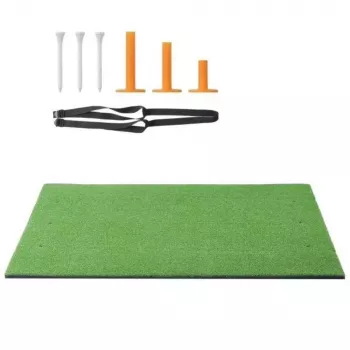
If you want one setup that covers both tee shots and turf shots, Golf Hitting Mat with Tees is built for convenient repetition: set the mat down, choose your tee height, and keep ball position consistent from session to session. It’s a practical fit for backyard, garage, or indoor net routines where stability and quick resets matter.
Helpful Add-Ons for Better At-Home Sessions
- Study Skills Mastery Guide | Digital Study Guide, Learning Strategies eBook, Focus Tips, Study Methods, Memory Techniques, Study Checklist PDF for planning short, consistent practice blocks and tracking what you’re working on.
- Calm Your Mind: Guided Meditation Series | Audio Course | Anxiety Relief Meditation for resetting between sets and keeping a steady tempo under pressure.
FAQ
Can a hitting mat be used indoors with real golf balls?
Yes, as long as you pair it with a net or impact screen that’s rated for real balls, you have enough ceiling clearance for your longest club, and the mat sits on a stable non-slip surface. Confirm your spacing so center strikes hit the middle of the net, not the frame.
Does practicing on a mat change ball flight compared with grass?
It can. Some mats reduce the penalty of slightly fat shots and may influence spin or launch versus natural turf. Use mat sessions to dial in contact and face control, then periodically validate results on grass or at a range.
What tee height should be used for driver practice on a mat?
A solid starting point is teeing it so the ball’s equator sits near the top of the driver face at address. Adjust slightly based on your clubhead shape and strike pattern, and keep the height consistent so feedback is reliable.













Leave a comment