Reading to Your Newborn from Day One: Calm, Easy Tips
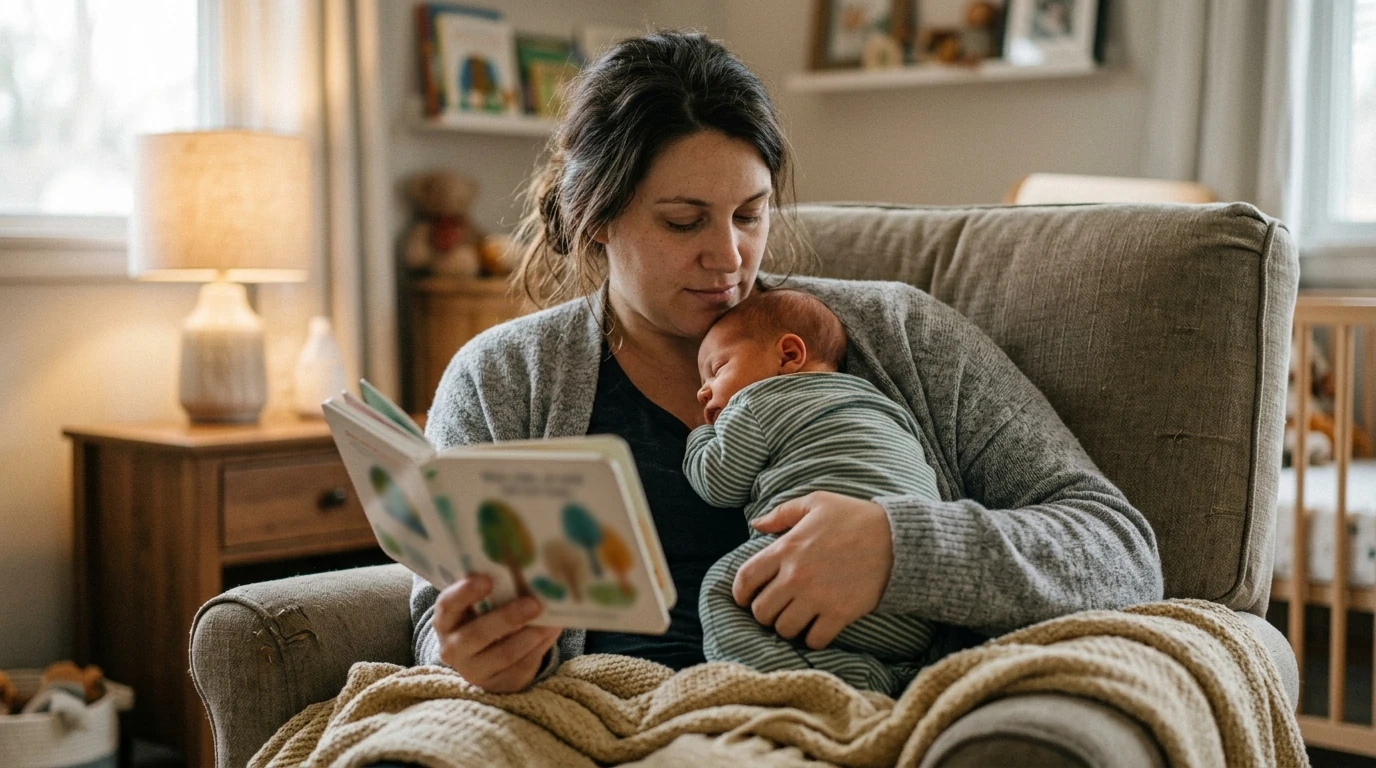
Reading to Your Baby from Day One: A Gentle Start for Newborns (Even If They Don’t “Pay Attention” Yet)
Those early days are a blur of feeding, sleep, and learning each other’s rhythms. If reading to a newborn feels like “too soon,” that’s exactly why a gentle approach helps: short, pressure-free moments that build familiarity with your voice, create a calming routine, and make books feel like comfort—not homework.
Why reading from day one can feel surprisingly natural
A newborn doesn’t need to understand a storyline to benefit from hearing you. What matters most right now is your steady voice and the feeling of closeness.
- A newborn can’t “follow the plot,” but they can hear your rhythm and tone.
- Reading works well as an anchor activity during contact naps, after diaper changes, or while you’re winding down in the evening.
- The goal is consistency and connection—not finishing pages or teaching letters.
- If your baby fusses or falls asleep, the reading still counts. You can stop, soothe, and try later.
If you want reassurance that these small interactions matter, organizations like the Reach Out and Read program and the American Academy of Pediatrics (HealthyChildren.org) emphasize that talking, reading, and singing support early communication—long before a child can respond in obvious ways.
When to start reading to baby (and what “starting” can look like)
Starting from day one can be as small as reading a few lines out loud while your baby rests on your chest. And if day one felt like survival mode, you haven’t missed anything—start whenever you want a calm ritual to lean on.
- Newborn-friendly reading can be 30–90 seconds; consistency matters more than duration.
- Reading can replace scrolling during a late-night feed: one poem, one paragraph, or a board book read slowly.
- “Starting” can simply mean: you open a book, you read a few lines, you stop when needed.
Gentle newborn reading ideas by moment of the day
| Moment | What to do | Time needed | What baby gets from it |
|---|---|---|---|
| After a diaper change | Read 4–6 lines from a board book or a rhyme | 1 minute | A predictable transition and your calm voice |
| During feeding | Read a short page quietly, pause often | 2–5 minutes | Steady rhythm and soothing tone |
| Contact nap | Read softly, or describe pictures slowly | 1–3 minutes | Familiarity with language without stimulation |
| Before bedtime | Repeat the same short book each night | 3–7 minutes | A consistent cue that sleep is coming |
What to read in the newborn stage (simple beats impressive)
When you’re tired, the “best” book is the one you can actually read in a soft voice without effort. Short, rhythmic text is perfect right now.
- Choose lullabies, nursery rhymes, gentle poems, or simple board books.
- Repetition is a feature, not a flaw. Familiar lines can be calming for you and your baby.
- Pictures matter less than your voice early on, though high-contrast images can be a nice bonus.
- Any calm text works: a children’s book, a short article read aloud, or a few pages from a favorite classic in a soothing tone.
- Skip pressure to “teach.” The win is shared calm and daily exposure to language.
If you like structure (especially when your brain is running on interrupted sleep), our team created a small, realistic plan you can follow without overthinking: Reading to Your Baby from Day One – Gentle Newborn Reading Guide.
How to read to a newborn without overstimulating
Newborn reading can be closer to a lullaby than a performance. The calmer you keep it, the more usable it becomes—even on fussy days.
- Keep your voice soft and slow.
- Watch cues: turning away, grimacing, stiffening, or crying can mean “too much right now.”
- Use tiny “chapters.” Stop anywhere; a book doesn’t need a beginning, middle, and end to be helpful.
- Dim lights for evening reading and skip animated voices if your baby gets alert or fussy.
- Try “narration reading”: describe what’s on the page in simple phrases if reading text feels like effort.
For a quick reference on early communication development, the CDC developmental milestones are a helpful, grounded resource—especially when you’re trying to understand what’s typical in the earliest months.
A realistic routine for parents who are exhausted
The easiest routine is the one that fits your current life. Not your ideal day—your actual day.
Common worries (and the kinder way to look at them)
A gentle guide that keeps it simple: what our reading plan supports
You can find it here: Reading to Your Baby from Day One – Gentle Newborn Reading Guide.
Getting started tonight: a 5-minute newborn reading reset
If you’re also looking for a simple way to support your own focus and follow-through during this season, our team also stocks digital guides that fit into small pockets of time, like the Calm Your Mind: Guided Meditation Series and the Study Skills Mastery Guide.
FAQ
Is it really okay to read to a baby from day one?
Yes. Keep it brief and soothing—newborn reading is about your voice, calm, and routine, not comprehension or finishing a book.
How long should I read to my newborn each day?
Anywhere from 30 seconds to a few minutes is plenty, especially in the early weeks. Consistency matters more than duration, and it’s always fine to stop when your baby shows signs of overstimulation.
What if my newborn cries when I try to read?
Try a different moment (after feeding, during cuddles, or as your baby gets sleepy), lower your voice and energy, and switch to simpler rhythmic text. If your baby still isn’t having it, skip reading in that moment and try again later.














Leave a comment