5 Useful Ways to Repurpose an Empty Tissue Box
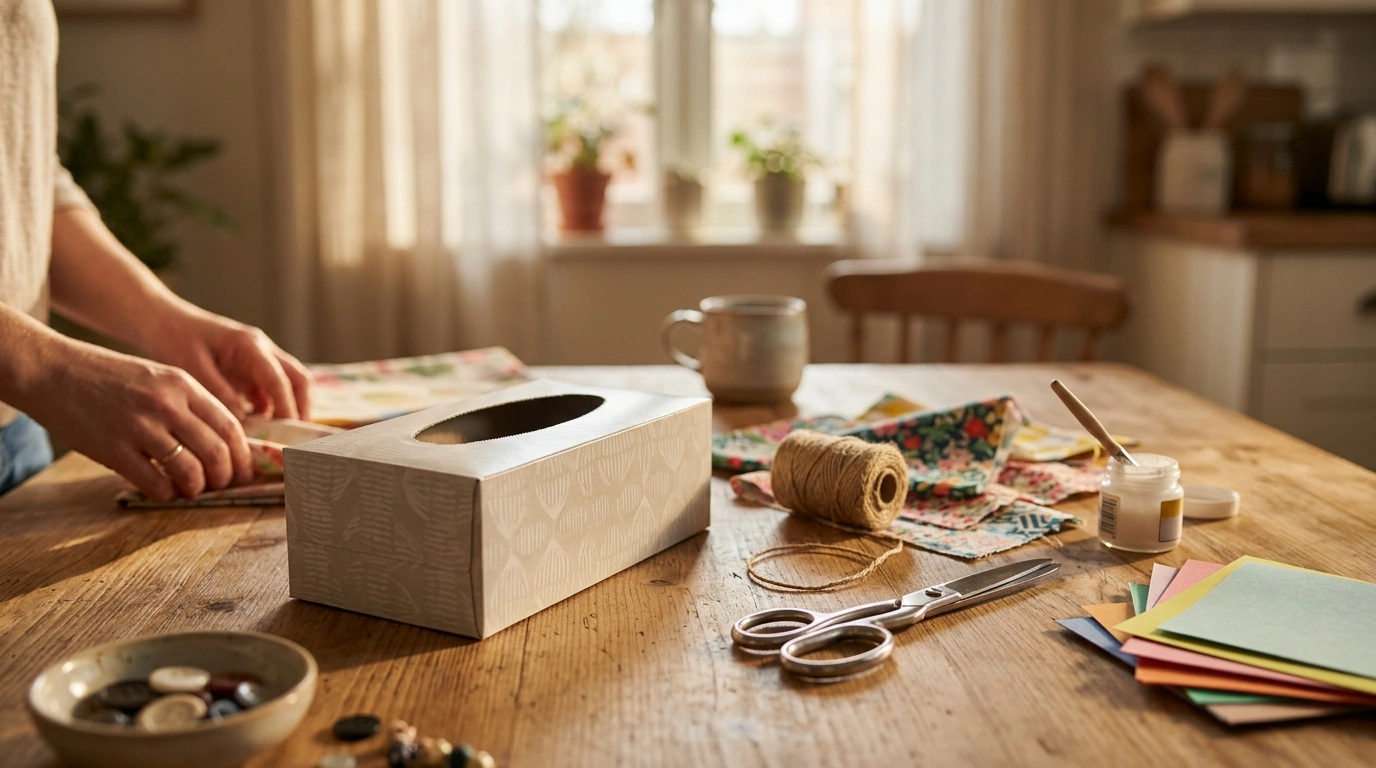
What can I turn a tissue box into?
An empty tissue box can become a useful organizer, a simple craft, or a decorative accent with just a few household supplies. Before reusing one, remove any remaining tissues and check that the cardboard is clean and dry. If the box is flimsy, reinforce its corners with tape or glue.
Make a desk or drawer organizer
Cut the box down to the height you need, then cover it with wrapping paper, fabric, or contact paper. Use it to hold pens, charging cords, notepads, makeup brushes, or other small items. For a drawer, make several boxes in different sizes and arrange them as compartments for batteries, clips, and other loose essentials.
Create a plastic bag dispenser
Fold clean, dry shopping bags and tuck them into the opening so the next bag is easy to pull out. Keep the box under a sink or in a closet, or decorate it to match the room. Avoid overfilling it, which can make bags difficult to remove.
Turn it into a gift box or craft project
A tissue box can hold a small gift, homemade treats in a separate sealed wrapper, or a collection of craft supplies. Trim the top opening if needed, then cover the box with paper or ribbon. For a kid-friendly project, turn it into a puppet stage, a toy mailbox, or a simple monster with paper teeth and eyes. Use child-safe materials and supervise scissor use.
Use it as a yarn or ribbon dispenser
Place a small ball of yarn or a spool of ribbon inside the box, then feed the loose end through the opening. This helps keep the material from rolling away while you work. Make sure the opening is smooth; cover rough cardboard edges with tape to help prevent snags.
Give the box a decorative second life
If you want the box to look polished on a table or shelf, a reusable cover can be a better fit than a decorated cardboard box. See the guide to modern brass tissue box covers for living room and dining table decor for ideas on choosing a more finished look.
FAQ
How can I decorate a tissue box cover?
Wrap a cardboard box in paper or fabric, or choose a reusable cover in a finish that suits the room. Keep the tissue opening clear so tissues can be pulled out easily.













Leave a comment