Montessori 5-in-1 Reading Nook: Books, Toys & Bench
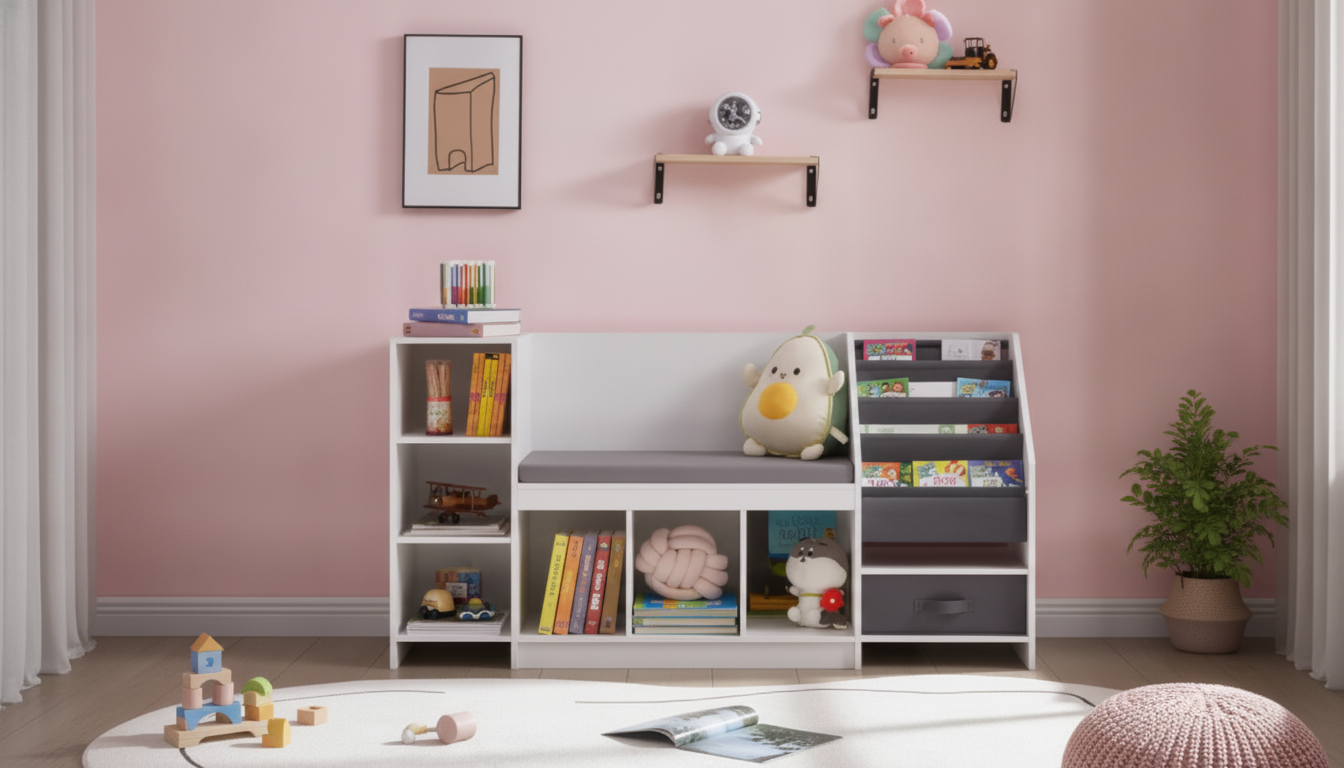
Montessori 5-in-1 Kids Reading Nook with Sling Bookshelf, Toy Organizer, and Bench
A well-designed reading nook can make books and play materials easy to reach, simple to tidy, and inviting to use every day. This 5-in-1 setup combines forward-facing book storage, toy organization, and a built-in bench to support independent routines in a child-friendly space. When the environment is thoughtfully arranged, kids get more chances to choose, focus, and reset their own space—small skills that add up over time. For more guidance, see 3 Steps to Create a Montessori Inspired Reading Area.
For families building a calm corner at home, the Montessori 5-in-1 Kids Reading Nook with Sling Bookshelf, Toy Organizer, and Bench brings the essentials together in one footprint, so reading time and quiet play don’t require a room makeover.
What a Montessori-style reading nook supports at home
- Independence: children can choose a book, return it, and switch activities without adult help.
- Order: clear, consistent “homes” for books and toys reduce visual clutter and make cleanup predictable.
- Freedom within limits: a defined nook signals where quiet reading and calm play happen.
- Confidence-building habits: putting items back becomes part of the activity, not a separate chore.
These ideas line up with widely recommended learning environment principles: warm, responsive routines and thoughtfully arranged spaces help children practice skills through everyday repetition. For additional background on early literacy benefits, see the American Academy of Pediatrics discussion of reading aloud and development (AAP—Reading Aloud to Children), and guidance on developmentally appropriate environments from NAEYC (NAEYC—Developmentally Appropriate Practice).
5-in-1 layout: how each zone works together
A multi-zone reading nook works best when each part has a clear job. The goal isn’t to store everything—it’s to store the “right amount” of the right things so kids can manage it successfully.
- Sling bookshelf: forward-facing storage helps kids see covers quickly and make their own selections.
- Toy organizer area: sorting by type (blocks, cars, dolls, art) supports categorization skills.
- Bench seat: a stable spot for reading, puzzles, or quiet play; can also serve as a shoe-on/shoe-off station in a bedroom.
- Shared footprint: combining functions saves space compared with separate shelves, bins, and seating.
- Daily flow: choose a book → read on the bench → swap to a toy → tidy back into the organizer.
Key functions at a glance
| Zone | Best for | Simple setup tip |
|---|---|---|
| Sling bookshelf | Picture books, early readers | Face covers outward and rotate weekly |
| Toy organizer | Small toys, manipulatives | Assign one category per bin/section |
| Bench | Reading, puzzles, calm play | Add a small cushion and a washable throw |
| Nook area | Routine-based use | Place near natural light when possible |
Choosing books and toys that fit the nook
What goes into the nook matters as much as the furniture. A smaller, curated selection usually gets used more often than an overflowing shelf.
- Keep a small “yes shelf”: 8–15 books that match current interests and reading level.
- Use rotation: store the rest elsewhere and swap in new titles to keep attention fresh.
- Prioritize durable formats for toddlers: board books, thick pages, wipeable covers.
- Limit mixed sets in the organizer: fewer, complete sets are easier to tidy and revisit.
- Add one open-ended option: blocks, magnetic tiles, figurines, or simple art materials.
If an older preschooler or early elementary child uses the nook for early independent work, consider keeping one “quiet focus” item in the organizer (like a small puzzle or matching cards). For families who want additional learning routines beyond the nook, the Study Skills Mastery Guide | Digital Study Guide, Learning Strategies eBook, Focus Tips, Study Methods, Memory Techniques, Study Checklist PDF can complement a calm corner by adding simple, age-flexible habits like short checklists and focus-friendly setup steps.
Room placement and styling for a calm corner
Where the nook sits can either protect reading time or constantly compete with household noise. A few placement tweaks can make the space feel intentionally “quiet” without being isolated.
- Place the nook away from high-traffic paths to reduce interruptions during reading.
- Use soft boundaries: a small rug defines the space and signals “book time.”
- Light matters: aim for daylight or a warm, glare-free lamp positioned behind the reader.
- Keep wall decor minimal right above the nook to avoid overstimulation.
- Offer a predictable basket: one small bin for current library books or “to return” items.
For kids who benefit from an extra calming routine before quiet time, pairing the nook with a short breathing or relaxation track can help the transition. The Calm Your Mind: Guided Meditation Series | Audio Course | Anxiety Relief Meditation can be used as a consistent cue: a few minutes of listening, then books or a puzzle on the bench.
Practical safety and durability checks
Simple routines that make it get used every day
FAQ
What age is a Montessori-style reading nook best for?
It works well from toddlerhood through early elementary, as long as shelves, books, and toy categories match the child’s size and skills. As kids grow, swap in longer books, more complex puzzles, or early readers while keeping everything reachable and easy to reset.
How many books should be kept in the sling bookshelf at one time?
About 8–15 books is a practical range for most homes because covers stay visible and choices feel manageable. Rotating weekly keeps interest high without turning the nook into storage for the whole library.
How can the toy organizer stay tidy without constant reminders?
Use clear categories (one type of toy per bin/section), keep fewer items per category, and consider picture labels for pre-readers. A short daily reset—two minutes before bed or quiet time—does more than repeated reminders throughout the day.












Leave a comment