Why Audiophiles Choose IEMs: Detail, Isolation, Value
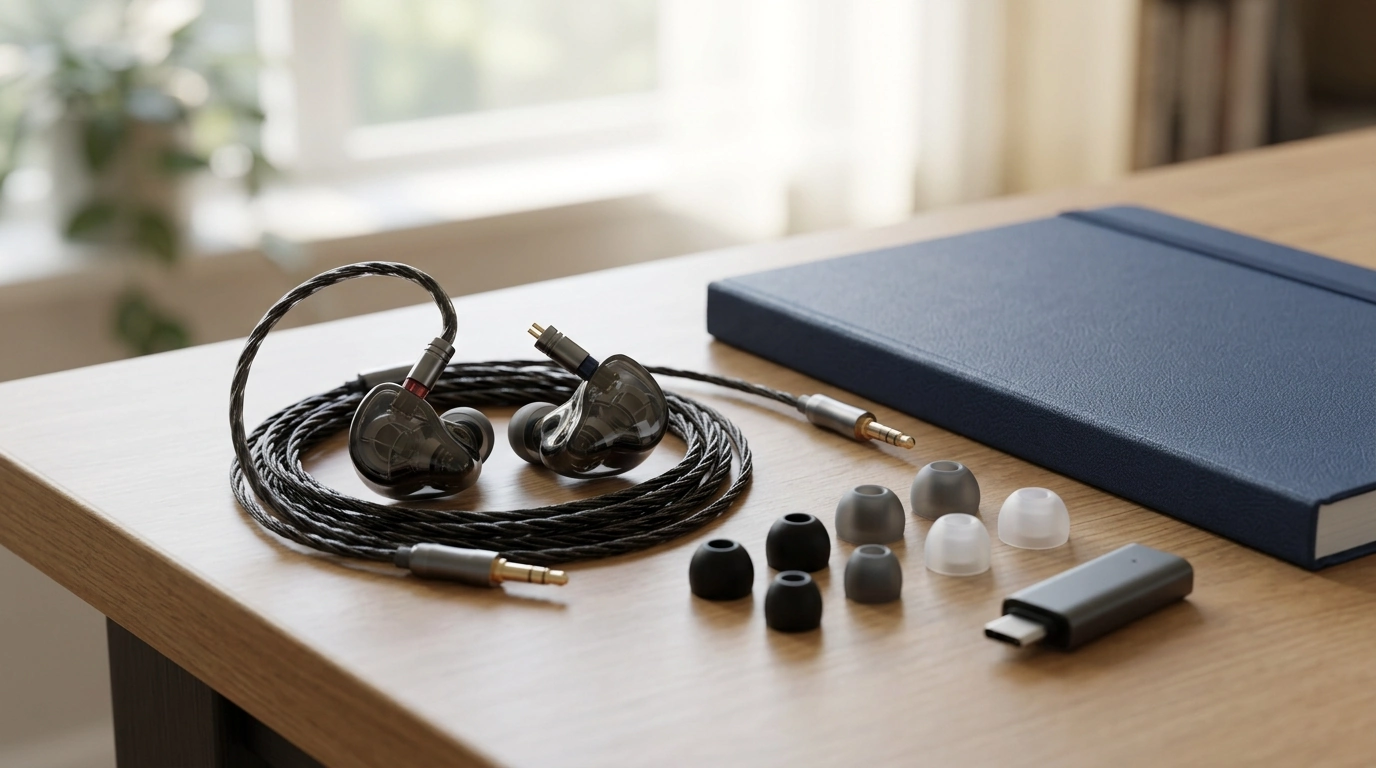
Why do audiophiles prefer IEMs?
Audiophiles often gravitate toward in-ear monitors (IEMs) because they deliver high-detail sound in a small, controllable listening setup. With the drivers sitting millimeters from the eardrum and a proper seal in the ear canal, IEMs can produce clear microdetail, precise imaging, and consistent bass response without needing to “fight” room acoustics or speaker placement.
Isolation is a major advantage. Passive noise blocking reduces the need to raise volume to overcome background sound, which can make long listening sessions more comfortable and help preserve dynamics. That isolation also makes IEMs a practical choice for commuting, office listening, travel, and late-night sessions where speakers aren’t feasible.
Another reason is fit-and-seal tuning flexibility. Different ear tips (silicone, foam, wide-bore, narrow-bore) can subtly shift perceived treble and bass while improving comfort. Many audiophiles enjoy dialing in a personal fit that locks in sub-bass and stabilizes the soundstage. Because IEMs couple directly to the ear, a consistent seal can lead to more repeatable results than swapping speaker positions or changing a room.
Value-per-dollar can also be compelling. Modern IEMs—especially hybrids using a mix of dynamic and balanced armature drivers—often offer high resolution and strong technical performance at prices that would be challenging to match in full-size headphones or speaker rigs. Pairing is simpler too: a clean source and a suitable dongle DAC or portable amp can unlock excellent performance without a large footprint.
For a deeper look at hybrid designs, tuning, fit, and source matching, see the full guide here: Hybrid Audiophile IEMs: Tuning, Fit & Source Tips.
For Why Audiophiles Choose IEMs: Detail, Isolation, Value, the best answer depends on fit, material, care instructions, and how the product will be used day to day.
Checking those details first helps avoid a poor match and keeps the choice practical after delivery.
FAQ
Do IEMs need an amp or DAC?
Many IEMs play well from a phone or laptop, but a quality dongle DAC can reduce noise, improve control, and provide a cleaner volume range—especially for sensitive models.













Leave a comment